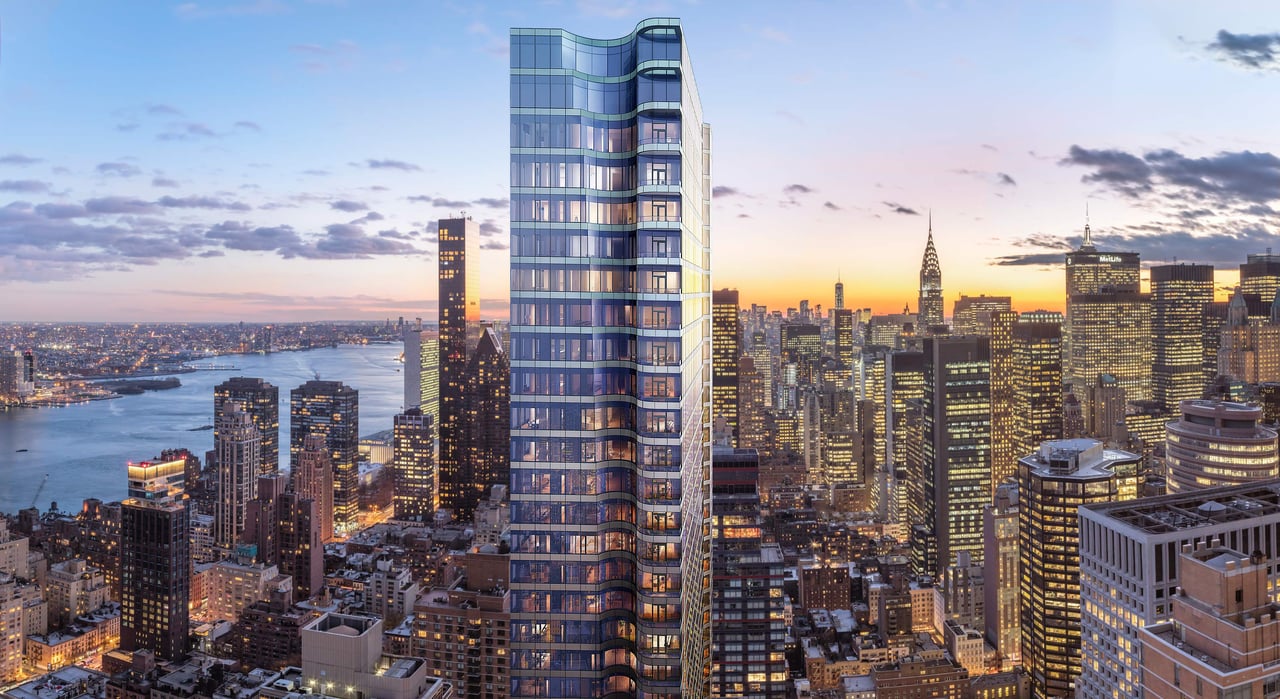
Most buyers begin a Manhattan search by looking at apartments. That is the last step in a sound acquisition process, not the first. The decisions that determine whether a purchase holds its value are made well before a specific residence is ever identified.
The following six considerations separate buyers who acquire well from buyers who simply acquire.
1. Location Is Measured in Blocks, Not Neighborhoods
Location is usually discussed at the level of the neighborhood. In Manhattan it is decided at the level of the block, and frequently at the level of which side of the street a building sits on.
It is also the only element of a purchase that can never be altered. An apartment can be renovated. A building can be recapitalized, its systems rebuilt, its board eventually replaced. Position is permanent, which is precisely why it deserves the most rigorous analysis and usually receives the least.
Two residences of comparable size and finish within a few hundred feet of one another can differ materially in value, and the reasons are specific rather than abstract: proximity to Central Park, avenue frontage versus a side street, corner exposure, the character and commercial composition of the cross street, transit access, school zoning, and the quality of light and air.
Light and air warrant particular scrutiny, because they are the most commonly mispriced attribute in the market. A view is durable only to the extent that the sites facing it cannot be built. Buyers frequently pay a substantial premium for an outlook that can be legally obstructed within a few years. The relevant question is not what a window faces today. It is what may be constructed opposite it, and unused development rights, assemblage activity, and zoning on adjacent parcels are all knowable before a contract is signed.
Landmark designation functions as a form of protection in this respect. Buildings within historic districts benefit not only from constrained citywide supply but from limits on what can be built immediately around them, which preserves scale, light, and character over time.
The most durable positions in Manhattan are those where supply is permanently exhausted: park frontage, landmarked corridors, and established blocks where no developable sites remain. Scarcity of that kind is not a market condition. It is a structural fact.
It does not follow that the most recognized address is always the best acquisition. Prime corridors carry a premium that is already fully reflected in pricing, while certain submarkets with comparable architecture, superior light, and improving infrastructure trade at a meaningful discount to their long term worth. Value at this level is frequently found one block from where everyone is looking.
Neighborhoods evolve. Blocks change slowly. Position does not change at all.
2. The Building Matters More Than the Apartment
A residence can be renovated. A building cannot. Financial health, governance, physical condition, and resident composition are conditions a purchaser inherits at closing and cannot meaningfully change afterward.
The diligence that matters is unglamorous. Reserve funds, underlying mortgage terms, recent and anticipated capital assessments, facade inspection and repair obligations, sublet policy, and the pattern of resale activity over the preceding several years all reveal more about future value than any individual apartment ever will.
Turnover deserves particular attention. Buildings occupied by long term residents, where ownership is stable and units rarely trade, hold value through market cycles more consistently than buildings that change hands frequently. Visible flipping activity is not evidence of desirability. It is evidence of speculation, and speculation is the first thing to unwind when conditions tighten.
3. Price and Value Are Different Measurements
Price is established at a single moment by two parties in a specific market. Value is what remains after that market has changed, and the two figures are only occasionally the same.
The most useful question a buyer can ask is not what a property is worth today. It is what the property will still be worth when credit is less available, when comparable inventory is more plentiful, and when the buyer pool has narrowed. Assets that depend on favorable conditions to justify their pricing are the assets that disappoint first.
4. Ownership Structure and Carrying Cost Belong in the Underwriting
Purchase price is the most visible number in a transaction and frequently the least consequential over a long holding period. Monthly maintenance or common charges, real estate taxes, assessments, insurance, financing costs, and applicable transfer and mansion tax obligations compound across years of ownership.
Ownership structure compounds alongside them. Whether a property is held individually, jointly, through a trust, or through an entity affects tax treatment, estate planning, privacy, and in many buildings whether an application will be approved at all. Cooperative boards frequently restrict entities and trust ownership outright.
Residency status introduces a further layer. Primary residence, secondary residence, and non-resident ownership carry materially different tax consequences, and New York's regulatory landscape continues to evolve. These questions are considerably easier to address before a contract is signed than afterward.
5. Preparation Determines Access
Certain Manhattan buildings have effectively no inventory. Units become available rarely and unpredictably, and they are frequently spoken for before any public listing appears. In those buildings the search is not the constraint. Readiness is.
A prepared buyer has financing arranged or proof of funds documented, counsel and tax advisors engaged, a board package substantially assembled, and internal decision making already aligned. When an opportunity surfaces in either the private or the public market, that buyer can act within days.
An unprepared buyer spends those days assembling what should have been assembled months earlier, and the opportunity resolves without them. In a scarcity market, preparation is not administrative. It is competitive advantage.
6. The Strength of the Advisory Team Determines the Outcome
Manhattan transactions are rarely won by whoever is willing to pay the most. They are won by whoever understands the seller's motivation, reads the timing correctly, identifies where leverage actually sits, and structures terms accordingly.
That work is not performed by a single person. Experienced real estate counsel, tax advisors, lenders, and where relevant architects and engineers each protect capital at a different point in the process, and each identifies risks the others would not see.
Emotion is the most expensive input in a luxury acquisition. The buyers who consistently achieve superior outcomes are not the least interested in the property. They are the best advised.
The Common Thread
Each of these considerations shares a characteristic. All of them are addressed before a search begins, and all of them become significantly more difficult and more expensive to address once a transaction is underway.
The most costly mistakes in Manhattan real estate are rarely made at the closing table. They are made months earlier, by buyers who began looking before they began preparing.
Working With Après Global
Manhattan acquisitions are decided before the search begins. If you are evaluating a purchase, a sale, or a new development opportunity, the conversation that matters most happens early.
Après Global is a luxury real estate team at Compass with more than $1 billion in closed sales, based at 110 Fifth Avenue in Manhattan. Founded by Lynne Mazin, former Wall Street, JD and MBA. The team advises high net worth individuals, international buyers, investors, and developers.
Après Global