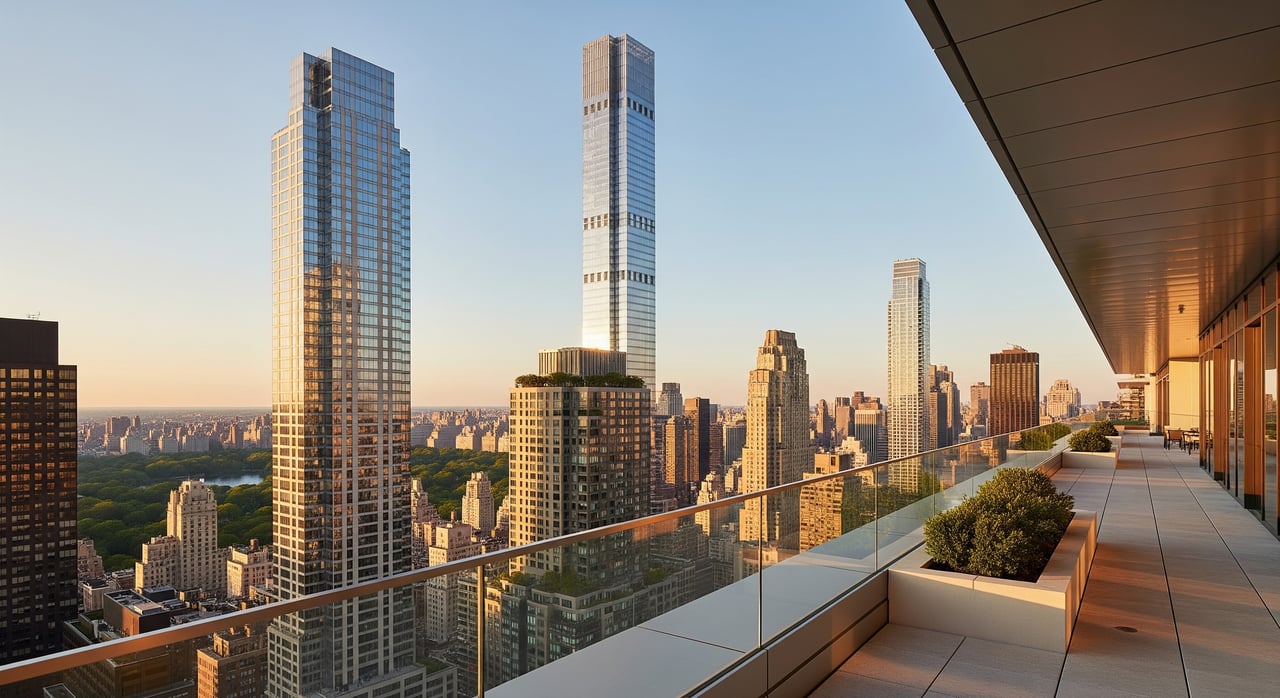
What if the most famous skyline in the world is also one of its most misunderstood markets? If you are watching Manhattan’s Billionaire’s Row, you know headlines can be dazzling while the reality on the ground is nuanced. In this guide, you will get a clear read on what is selling, who is buying, the forces shaping pricing, and how to make a smart move whether you are purchasing or selling. Let’s dive in.
What is Billionaire’s Row
Billionaire’s Row refers to the West 57th Street corridor from roughly Fifth to Seventh Avenues and nearby blocks in Midtown Manhattan. The area is defined by ultra‑luxury, supertall condominium towers. Notable buildings include One57, 432 Park Avenue, 111 West 57th Street, Central Park Tower, 220 Central Park South, and 53 West 53. Most homes are high‑floor condos with expansive Central Park and skyline views, large footprints, curated amenities, and substantial common charges.
The market now: mid‑2024 snapshot
After a rapid 2010s expansion, the ultra‑luxury segment slowed in early 2020, rebounded in 2021 and 2022, then faced new headwinds through 2023 and mid‑2024. Interest rate volatility and broader macro uncertainty narrowed the buyer pool that relies on financing. At the same time, select trophy sales still closed at remarkable levels. As one example of the scale involved, a home at 220 Central Park South reportedly sold for about $238 million in 2021.
You should expect a mixed picture today. Marketing times at the mid‑ and high‑end are generally longer, and price negotiations are more common. Liquidity is thin at the very top, so a single closing can skew averages. To really understand direction, track both mean and median price per square foot, contracts signed for listings above $5 million, days on market for $5 million and up, and the share of price reductions.
Who buys here and why
Buyers are typically ultra‑high‑net‑worth individuals and family offices from the United States and abroad, along with investors pursuing diversification or a city base. Condominiums tend to be preferred over co‑ops for their flexibility. Many buyers use large cash positions or private bank financing, while those who finance often pursue jumbo or super‑jumbo loans with bespoke terms.
Motivations vary. You may value protected views, world‑class amenities, and proximity to Central Park, culture, and Midtown business hubs. Some buyers seek a global city presence or status ownership. Others are focused on portfolio diversification, estate planning, or a pied‑à‑terre strategy.
What drives prices on this corridor
Pricing is highly building‑specific. A few variables tend to matter most.
Views and line scarcity
Central Park exposure, view corridors that clear neighboring towers, and placement on a sought‑after line can command large premiums. Long‑term value often follows view protection and line scarcity.
Floor plan, volume, and scale
Full‑floor or multi‑level layouts with high ceilings, private elevators, and balanced bedroom counts trade stronger than odd or segmented plans. Outdoors space and corner exposures can add meaningful value.
Amenities and operations
Pools, spas, concierge services, dining partnerships, and parking all help. Still, buyers weigh the benefit against monthly carrying costs. Strong operations and transparent budgets support resale confidence.
Building quality and governance
High sticker prices do not remove building‑level risks. Construction or mechanical issues, litigation between sponsors and buyers, and assessments can deter demand or affect resale values. Review the offering plan, financial statements, reserve funds, and any pending litigation disclosures.
Scarcity and pipeline
Many of the supertalls were delivered between 2014 and 2021. Zoning limits, site scarcity, and financing constraints mean the pipeline is shallower than mainstream condo supply. That scarcity can support values for best‑in‑class properties, yet outcomes remain project‑specific.
Supply dynamics and sponsor behavior
Developers often release units in phases and hold select penthouses off market to manage pricing. Bulk closings or sponsor deals can distort quarter‑to‑quarter stats. Today’s resale activity in early‑generation towers is an important signal for secondary market pricing. When you evaluate a specific building, look at recent resales as well as sponsor closings to understand true velocity and price per square foot.
Financing, taxes, and transaction structure
Many purchases close with significant cash or private bank financing. If you use debt, expect portfolio lenders and customized terms. Transaction costs in Manhattan vary by price and structure and can include attorney fees, title insurance, mortgage recording tax for financed deals, state and city transfer taxes, and mansion taxes at higher price points. Because rates and thresholds change, confirm current figures with a Manhattan real estate attorney or the NYC Department of Finance before you commit to numbers.
Privacy and estate planning also play a role. Purchasers sometimes use LLCs or trusts subject to enhanced know‑your‑customer checks by banks and law firms. Most supertall properties are condominiums, which are generally more flexible than co‑ops for non‑resident or investor ownership.
Key risks to watch
- Interest rates and macroeconomy. Higher rates reduce leverage for financed buyers and can lengthen marketing times. Macro volatility can delay decision making.
- Liquidity risk. Large trophy homes are thinly traded and can take months or even years to sell if not priced with current comps in mind.
- Concentration risk. Many luxury units are clustered on a few blocks. In a down cycle, localized oversupply can pressure prices.
- Policy risk. Proposals involving pied‑à‑terre taxes or transfer taxes can influence buyer sentiment. Track the current legislative backdrop before forming expectations.
- Building operations and reputation. Litigation or mechanical issues can suppress demand in an otherwise desirable corridor. Always review disclosures and financials.
How to analyze a purchase
Use a simple, disciplined playbook so you stay clear‑eyed in a headline‑driven market.
- Compare price per square foot. Review 1‑year and 3‑year bands for the building and immediate peers. Track both mean and median to balance the impact of very large closings.
- Check liquidity and velocity. Review active listings above $5 million, days on market for recent closings, and contracts signed in the last quarter.
- Scan price reductions. A rising share of reductions can flag shifting leverage from sellers to buyers.
- Validate operating costs. Review common charges, taxes, reserves, and any special assessments. Request recent financial statements and board minutes if available.
- Confirm view protection. Study neighboring air rights and future development risks that could change the skyline outlook.
- Read the documents. Review offering plans, amendments, and litigation disclosures. Ask counsel to confirm any open issues.
- Align capital structure. Decide how you will finance, and confirm terms and timing with your bank early to avoid surprises.
How to position a sale
Selling into a thin market requires precision.
- Price to the moment. Use building‑level comps and both short‑ and multi‑year price per square foot trends to target the right band from day one.
- Prepare the asset. High‑impact staging and minor repairs protect days on market and negotiation leverage.
- Know buyer profiles. Anticipate cash‑heavy or private‑bank clients and prepare the data room with documents, floor plans, financials, and a clear operating cost schedule.
- Plan your release strategy. Consider timing that aligns with peak showing periods and global travel calendars. Manage showing protocols for privacy.
What to track each quarter
You do not need a flood of data. Focus on a tight set of metrics that signal true direction.
- Median and average price per square foot for the corridor
- Active listings and contracts signed above $5 million and above $10 million
- Days on market for closed and pending listings above $5 million
- Share of listings with price reductions in the past 60 to 90 days
- Resale performance versus sponsor closings by building
How Après Global can help
You deserve an advisor who treats these transactions with the rigor they require. As a boutique luxury advisory inside Compass, Après Global pairs institutional‑grade analysis with white‑glove execution. Senior advisors with finance and legal backgrounds lead every engagement. You get discreet, senior‑level counsel, pre‑market intelligence, and access to the Compass platform’s distribution and concierge resources.
Whether you are acquiring a park‑view residence, repositioning a resale, or weighing off‑market options, our team calibrates pricing, vets documentation, and manages negotiations with a private, data‑driven approach.
Ready to talk strategy tailored to your objectives? Request a Private Consultation with Après Global.
FAQs
Is there a pricing bubble on Billionaire’s Row?
- Prices are cyclical and sensitive to wealth and financing conditions. Track liquidity, days on market, and negotiated sale frequency rather than relying on a few headline closings.
Are prices rising or falling right now on Billionaire’s Row?
- Through 2021 and 2022, activity recovered, then cooled in 2023 through mid‑2024 amid higher rates. Trends are building‑specific, with some trophy homes achieving strong prices while others see reductions and longer marketing times.
Who typically buys Billionaire’s Row condos?
- Ultra‑high‑net‑worth domestic and international buyers, along with investors and pied‑à‑terre purchasers, often using large cash positions or bespoke private bank financing.
How long does it take to sell a Billionaire’s Row home?
- It varies widely. Well‑priced, in‑demand homes can move in weeks, while unique or very large residences can take a year or more in a low‑liquidity segment.
Should I choose a condo or a co‑op for flexibility and privacy?
- Most supertalls on this corridor are condominiums. Condos tend to offer more flexibility for non‑resident owners and investors compared to co‑ops, which have board approvals and restrictions.