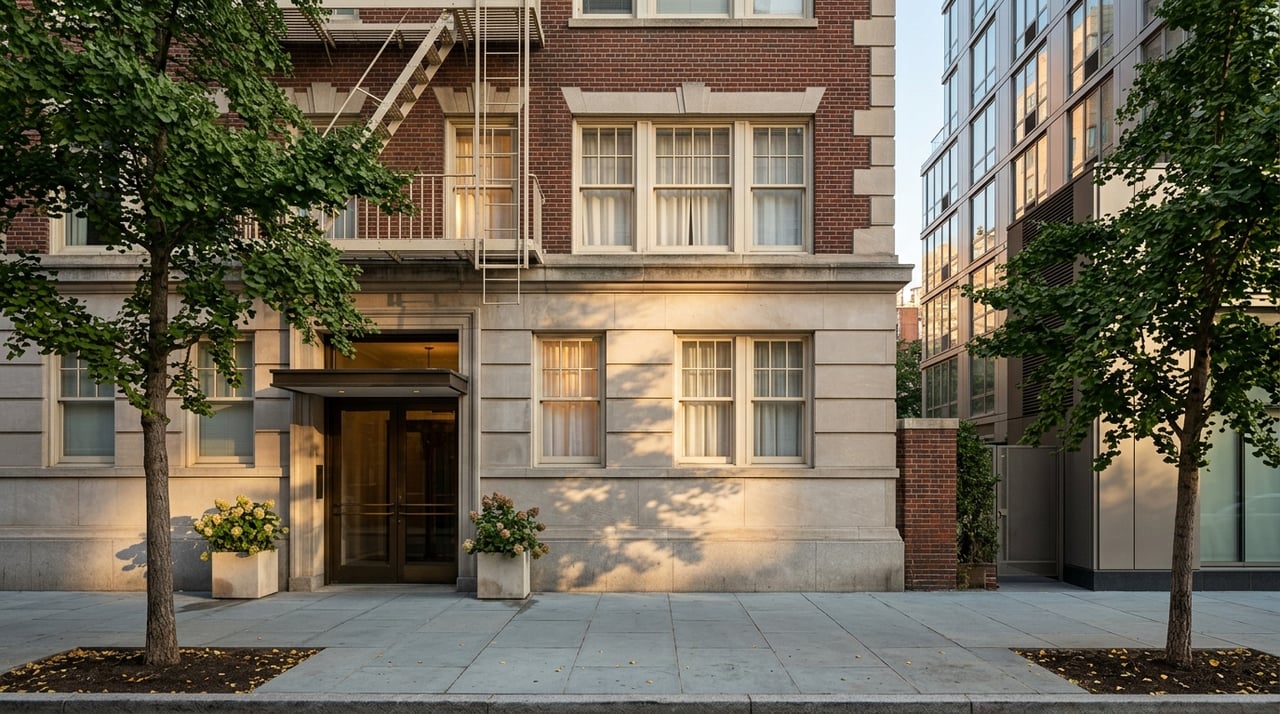
If you are comparing Riverside and Parkside living on the Upper West Side, you are really choosing between two distinct daily rhythms within the same neighborhood. Both offer access to iconic green space, classic Manhattan architecture, and strong transit connections, but the feel can shift meaningfully from block to block. The right fit often comes down to how you want to move through your day, what kind of outlook you value, and which streetscape feels most like home. Let’s dive in.
The Upper West Side Context
The Upper West Side’s Community Board 7 spans from West 59th Street to West 110th Street, between Central Park and the Hudson River. That means Riverside Drive and West End Avenue on one side, and Central Park West with its adjacent blocks on the other, are part of the same broader district.
Even so, these edges do not read the same way. The park side sits closer to Central Park and includes a historic district running roughly from West 62nd to West 96th Streets between Central Park and Amsterdam Avenue. The Riverside and West End side presents more of a Hudson River edge, shaped by its own historic development pattern and avenue rhythm.
Parkside Living: Central Park at Your Door
For many buyers, the biggest appeal of Parkside living is simple: immediate access to Central Park. The park spans 843 acres from 59th Street to 110th Street, and it draws more than 42 million visits annually.
That scale affects everyday life. Central Park offers 21 playgrounds and eight running loops, giving you a wide range of options for walks, exercise, and outdoor time. If your routine includes regular park visits, the Parkside setting can make that habit feel seamless.
The park side also connects naturally to museum-adjacent activity. The American Museum of Natural History sits within the historic district area, which adds another layer to how the neighborhood functions day to day. For some buyers, that means a more active pattern built around park entrances, cultural destinations, and frequent movement along Central Park West.
What the streetscape feels like on the park side
The park-side historic district has a distinctive architectural identity. Historic district materials describe late-1890s through Great Depression-era development that includes twin- and triple-towered apartment buildings along Central Park West.
Beyond the grander frontage, the district also includes commercial structures and both large and small apartment houses along the main avenues and cross streets. On many side streets, row-house streetscapes become more prominent. In practice, that can create a sharper contrast between major avenues and quieter residential blocks.
Riverside and West End Living: A Riverfront Rhythm
On the Riverside and West End side, the experience tends to feel more linear and waterfront-oriented. Riverside Park Conservancy cares for six miles of parkland along the West Side, from 59th Street to 181st Street, tying the southern section to the Hudson River waterfront and the Hudson River Greenway.
This is a different kind of green-space relationship. Instead of a large interior park landscape, Riverside Park offers a long north-south corridor that supports walking, jogging, and access to active recreation areas. The Conservancy map also shows amenities such as dog runs and ballfields concentrated along parts of the south and middle stretches.
For some buyers, that translates into a more contained residential feel. You may find yourself thinking less in terms of entering a major park destination and more in terms of following a continuous riverfront route as part of your daily routine.
What the streetscape feels like on Riverside and West End
Historic district reports describe the Riverside-West End area as a large collection of apartment houses, apartment hotels, free-standing houses, row houses, and flats dating mainly from the 1890s to the 1930s. The reports also emphasize Riverside Drive and West End Avenue as two defining spines of the area.
West End Avenue, in particular, is noted for buildings that sit at the property line with nearly uniform cornice lines. The northern end also retains a notable row-house and low-density-flats fabric. Together, these details help explain why this side can feel more cohesive along long residential blocks.
Daily Life: Which Routine Fits You Better?
If you are weighing Riverside versus Parkside living, your daily routine may be the most useful lens. Geography shapes convenience in subtle ways, especially on the Upper West Side where a few blocks can change your outlook and your movement patterns.
On the park side, life may revolve more around direct Central Park access, playground visits, running loops, and museum-adjacent outings. On the Riverside and West End side, daily habits may lean more toward longer riverfront walks, greenway access, and a more linear path through outdoor space.
These are not hard rules, and many residents use both parks regularly. Still, the side you choose can influence what feels easiest and most natural on an ordinary weekday.
Transit and circulation differences
Transit access is another practical factor. Central Park’s west side is served by the 1, 2, 3, B, and C trains, and the M72 crosstown bus links West End Avenue, Broadway, Columbus Avenue, and Central Park West at 72nd Street.
That matters because connectivity can shape how you use the neighborhood. If you value crosstown movement and frequent park entry points, the Parkside area may feel especially convenient. If you prefer a quieter residential approach with strong access to the riverfront, Riverside and West End may better match your pace.
Building Character and Apartment Outlooks
Both Riverside/West End and Parkside are heavily apartment-house driven, but the architectural expression differs. That can affect not only curb appeal, but also how a home feels from inside.
On the park side, the landmarked frontage and taller silhouettes along Central Park West can create a more dramatic avenue presence. On side streets, row-house blocks may soften that scale and create a different texture.
On Riverside and West End, the long residential blocks and consistent avenue rhythm often read as more continuous. The result can feel calm and cohesive, particularly if you are drawn to a quieter street wall rather than a grand frontage.
Why exact placement matters more than labels
One of the most important takeaways is that corridor labels only tell part of the story. On the Upper West Side, view, exposure, floor height, and exact block placement can matter more than whether a listing is described as Riverside, West End, or Parkside.
That is especially true because both the park and the river create strong but very different outlooks. A higher-floor apartment with a broad western exposure may live very differently from a lower-floor apartment one block away. In the same way, a home near Central Park West can offer a very different experience from one deeper into the side streets.
How to Decide Between Riverside and Parkside
If you are deciding between these two Upper West Side settings, it helps to focus on how you actually want to live rather than which label sounds more appealing. The strongest choice is usually the one that supports your routine, your visual preferences, and your long-term priorities.
Here are a few useful questions to ask:
- Do you want your nearest open space to be Central Park or Riverside Park?
- Do you picture yourself using playgrounds, running loops, and museum-adjacent routes more often?
- Do you prefer long riverfront walks and greenway access?
- Are you drawn to grand park-facing avenues or quieter, more uniform residential blocks?
- Is your priority a dramatic frontage, a calm interior-block feel, or a specific kind of view?
For many buyers and long-term owners, this is the real comparison. It is less about one side being better and more about which environment aligns with your version of Upper West Side living.
A Smart Way to Evaluate Each Option
When you tour homes in this part of Manhattan, it is worth evaluating more than the address line. A well-positioned apartment on either side of the neighborhood can outperform a more obvious location if the light, exposure, and street placement are right.
That is why a block-by-block lens matters. On the Upper West Side, small geographic shifts can change noise levels, openness, park access, and the sense of privacy. For buyers seeking a primary residence, pied-à-terre, or long-term hold, these details often shape value more than the headline label.
If you are weighing Riverside versus Parkside living on the Upper West Side, a discreet, data-driven evaluation can help you compare not just inventory, but also long-term fit. For tailored guidance on Manhattan home searches and high-value acquisitions, Après Global Team at Compass can provide private, senior-led advice.
FAQs
What is the difference between Riverside and Parkside living on the Upper West Side?
- Parkside living is oriented toward Central Park and its immediate access points, while Riverside living is oriented toward Riverside Park, the Hudson River waterfront, and the greenway.
Which park is larger for Upper West Side residents, Central Park or Riverside Park?
- Central Park is an 843-acre park stretching from 59th Street to 110th Street, while Riverside Park is a six-mile stretch of parkland along the West Side from 59th Street to 181st Street.
What building styles define Parkside blocks on the Upper West Side?
- Historic district materials describe Parkside areas as featuring twin- and triple-towered apartment buildings along Central Park West, with row-house streetscapes on many side streets.
What building styles define Riverside and West End blocks on the Upper West Side?
- Historic district reports describe a mix of apartment houses, apartment hotels, free-standing houses, row houses, and flats dating mainly from the 1890s to the 1930s, with strong avenue rhythm along Riverside Drive and West End Avenue.
Which matters more on the Upper West Side: the corridor name or the exact apartment location?
- Exact placement often matters more, because view, exposure, floor height, and the specific block can significantly change how an apartment feels and functions.
What transit serves the Parkside and West Side areas of the Upper West Side?
- The west side of Central Park is served by the 1, 2, 3, B, and C trains, and the M72 crosstown bus links West End Avenue, Broadway, Columbus Avenue, and Central Park West at 72nd Street.